
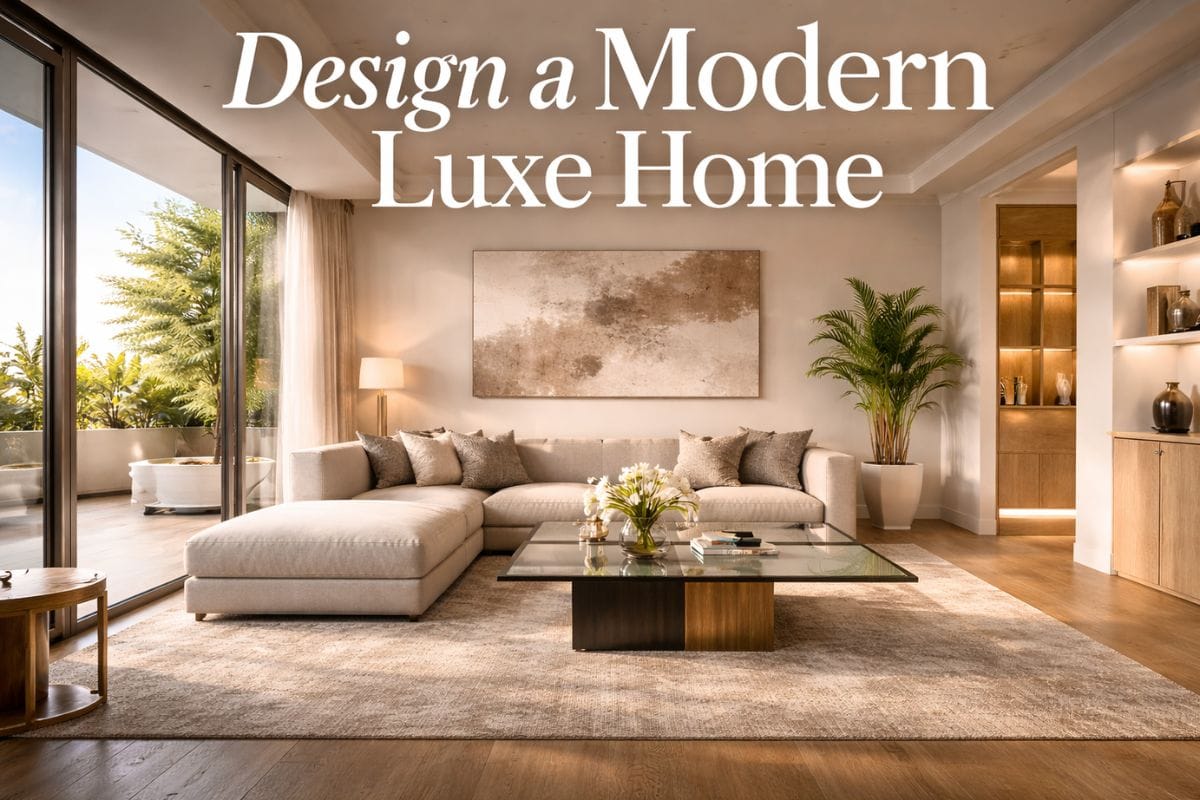
There’s something magnetic about walking into a home that feels calm, tailored, and quietly luxurious. The air feels lighter. The lines are cleaner. Every piece seems intentional. If you’ve been wondering how to design a contemporary home that feels both modern and inviting, the answer isn’t about stripping everything away. It’s about balance—between structure and softness, minimalism and personality, elegance and comfort.
Contemporary design isn’t cold or stark when done right. It’s layered. It’s thoughtful. And most importantly, it feels like you. Let’s step inside the principles that define how to design a contemporary home with warmth, confidence, and polish.
Start with an Open, Intentional Layout
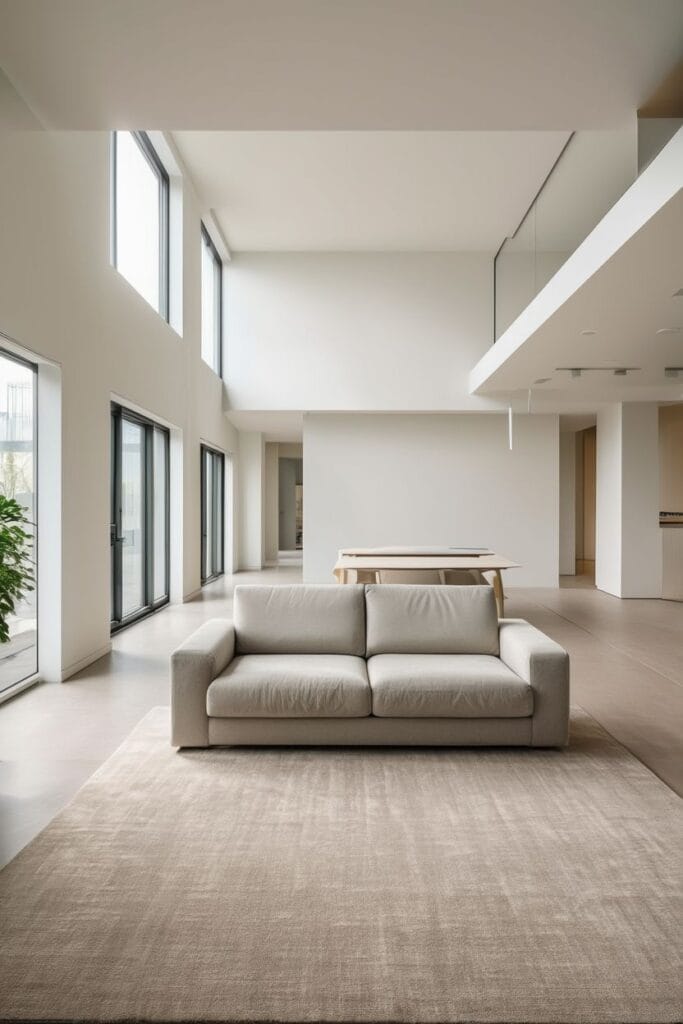
The foundation of how to design a contemporary home begins with space planning. Contemporary homes breathe. They favor open layouts, but that doesn’t mean everything floats without purpose. The magic lies in defining zones without building walls. Rugs anchor seating areas. Lighting subtly marks dining spaces. Furniture placement guides natural movement.
When I work with homeowners, I always start by walking through how they live in their space—where they gather, where they unwind, where the clutter sneaks in. An open plan should feel fluid, not cavernous. Keep pathways clear, maintain at least 30–36 inches of circulation space, and avoid overcrowding. Negative space is part of the design. It gives your eye a place to rest and allows key pieces to shine.
Choose a Refined, Cohesive Color Palette
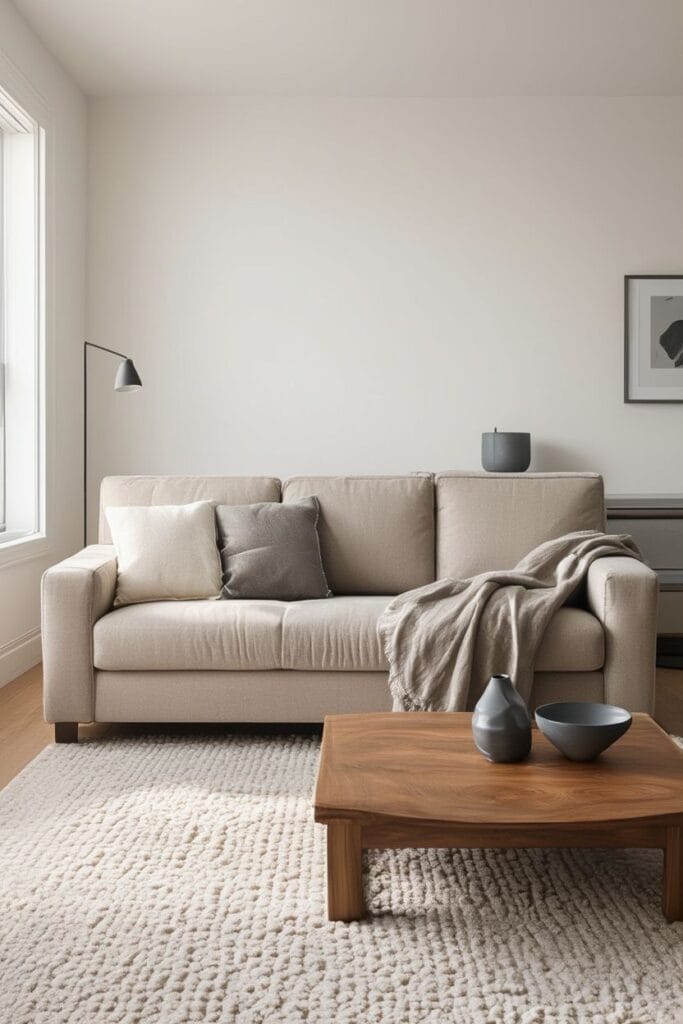
Color sets the emotional temperature of a room. In contemporary interiors, palettes tend to lean neutral—think warm whites, soft taupes, muted grays—but that doesn’t mean boring. It means controlled.
You may also explore our guide on modern living room decor for more layout inspiration.
If you’re exploring how to design a contemporary home, select two to three base colors and repeat them throughout the house. Layer in subtle contrast through textiles and accents rather than bold, chaotic changes from room to room. Soft charcoal against ivory. Cream paired with warm walnut. Even a deep forest green can feel contemporary when used with restraint. The goal is cohesion, not uniformity.
Layer Lighting for Depth and Drama
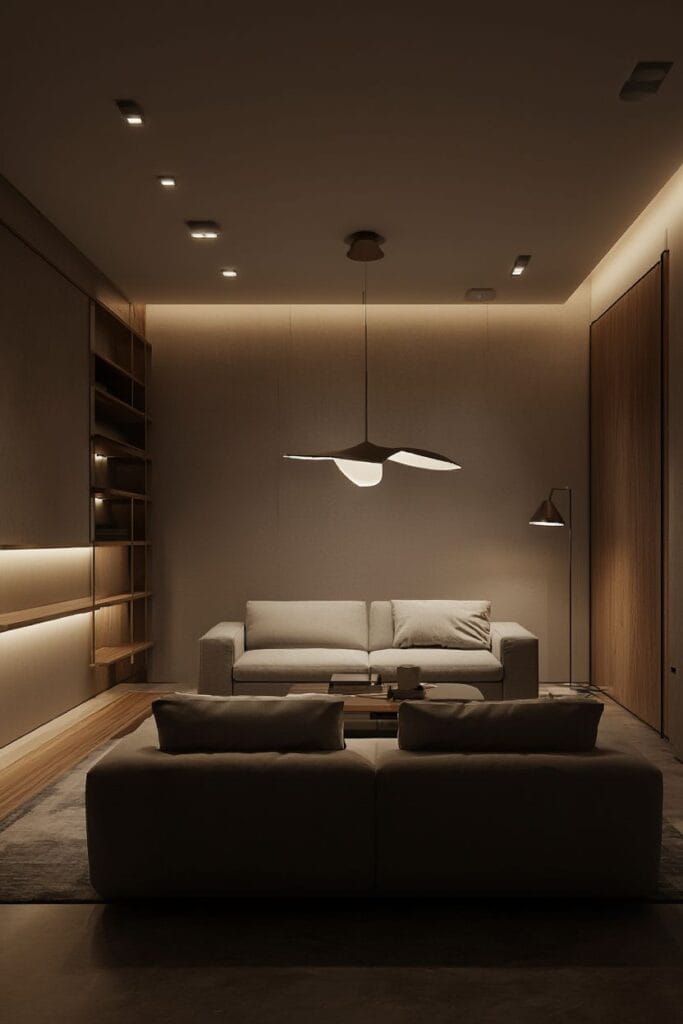
Lighting is where many contemporary homes either shine or fall flat. Overhead fixtures alone won’t create the depth you need. True contemporary design relies on layered lighting—ambient for overall glow, task for function, and accent for atmosphere.
Install recessed lighting for clean overhead illumination, then introduce sculptural pendants or sleek chandeliers for personality. Add floor lamps near seating and LED strips under cabinetry for subtle drama. Dimmer switches are non-negotiable. They allow your space to shift from bright and energetic to soft and intimate with ease.
Embrace Natural Materials with Modern Finishes
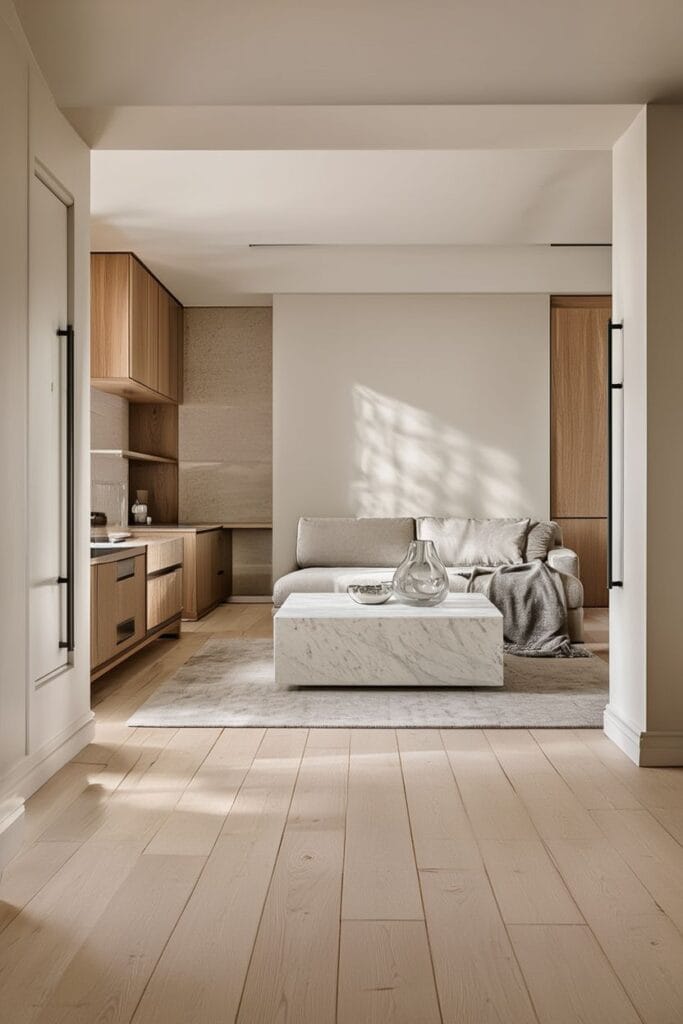
A contemporary home isn’t made of plastic and chrome. It’s grounded in authenticity. Wood, stone, glass, and metal bring richness and texture that feel timeless. The difference lies in how they’re finished.
Opt for matte black hardware instead of ornate brass. Choose white oak floors with a natural finish rather than heavy stain. Consider honed marble instead of high-gloss stone. These refined materials add warmth without overwhelming the clean aesthetic that defines how to design a contemporary home.
Balance Clean Lines with Soft Textures
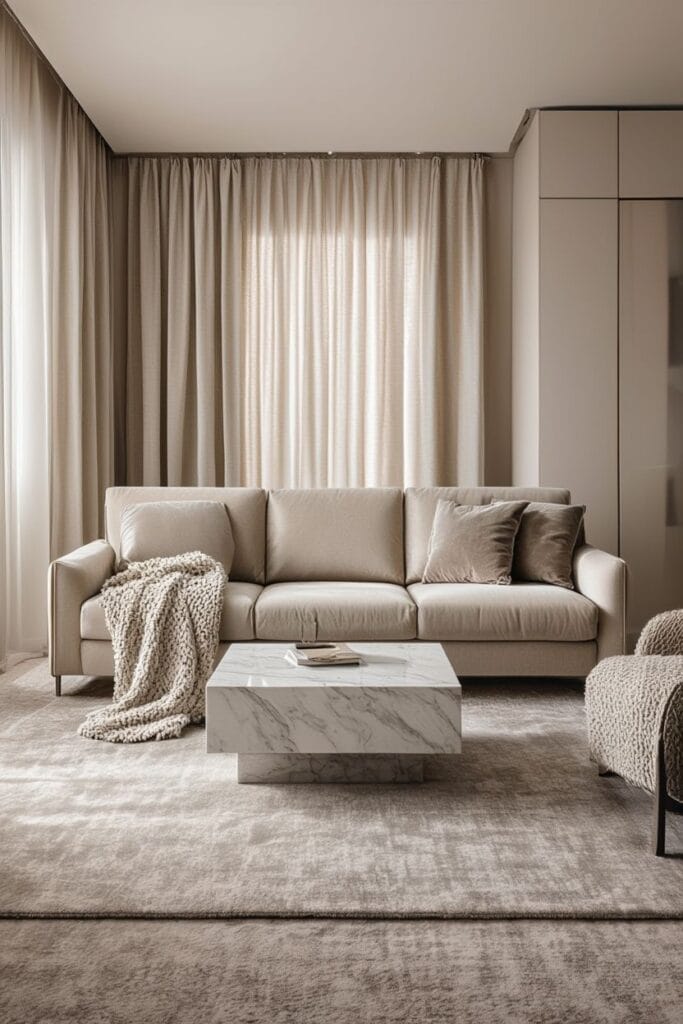
Straight lines are a hallmark of contemporary style, but too many can make a space feel rigid. Contrast is essential. Pair a streamlined sofa with a chunky knit throw. Offset a sleek marble coffee table with a plush area rug.
Texture introduces dimension and keeps minimalism from feeling sterile. Bouclé chairs, linen drapes, velvet pillows—these soften architectural lines and invite touch. The result feels curated rather than cold.If you’re working with a compact space, our small living room ideas can help maximize style without clutter.
Invest in Statement Pieces That Anchor the Room
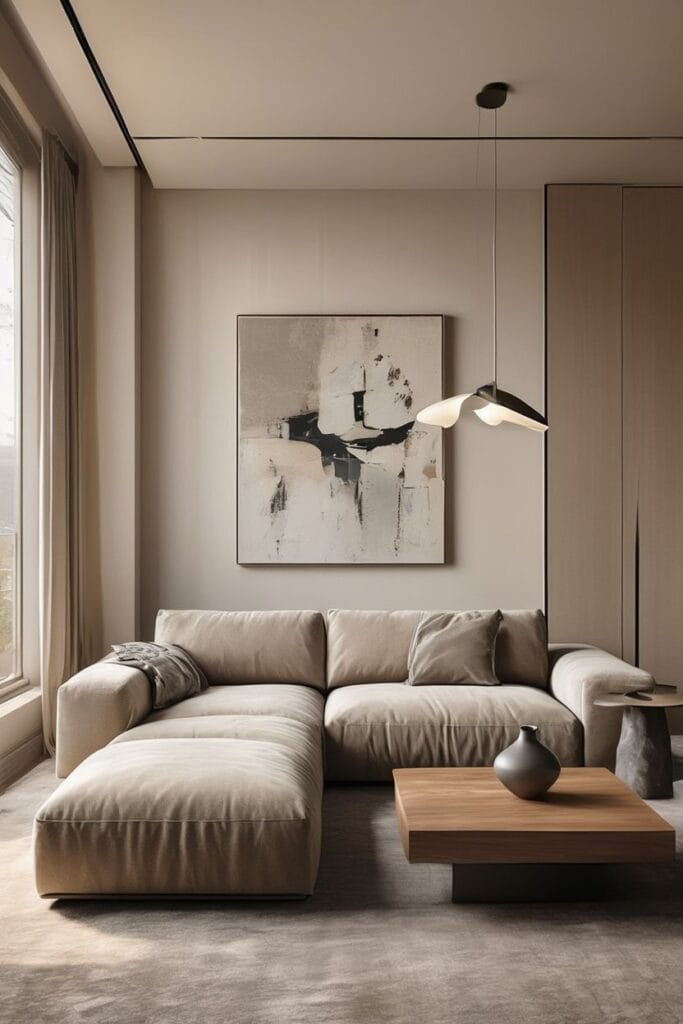
Every contemporary room needs a focal point. It might be an oversized abstract painting, a sculptural light fixture, or a bold sectional in a muted tone. The key is intention.
Instead of filling a room with many small decorative items, choose one or two impactful pieces. They create drama without clutter. This approach is central to how to design a contemporary home that feels luxe instead of busy.
Keep Furniture Scaled and Proportional
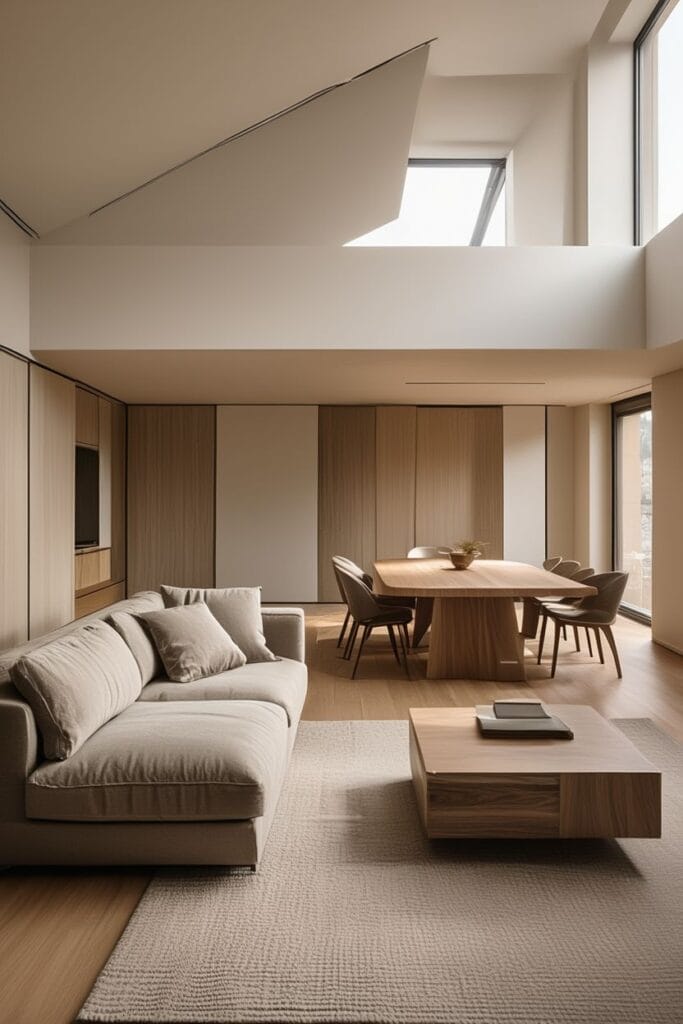
Scale can make or break your design. In open layouts, undersized furniture looks lost. In smaller rooms, oversized pieces overwhelm. Measure carefully and consider ceiling height as well as floor space.
Low-profile sofas emphasize horizontal lines and make ceilings appear taller. Substantial dining tables ground large areas. Proper spacing between pieces ensures comfort and flow. Contemporary design thrives on proportion.
Integrate Smart Storage Seamlessly
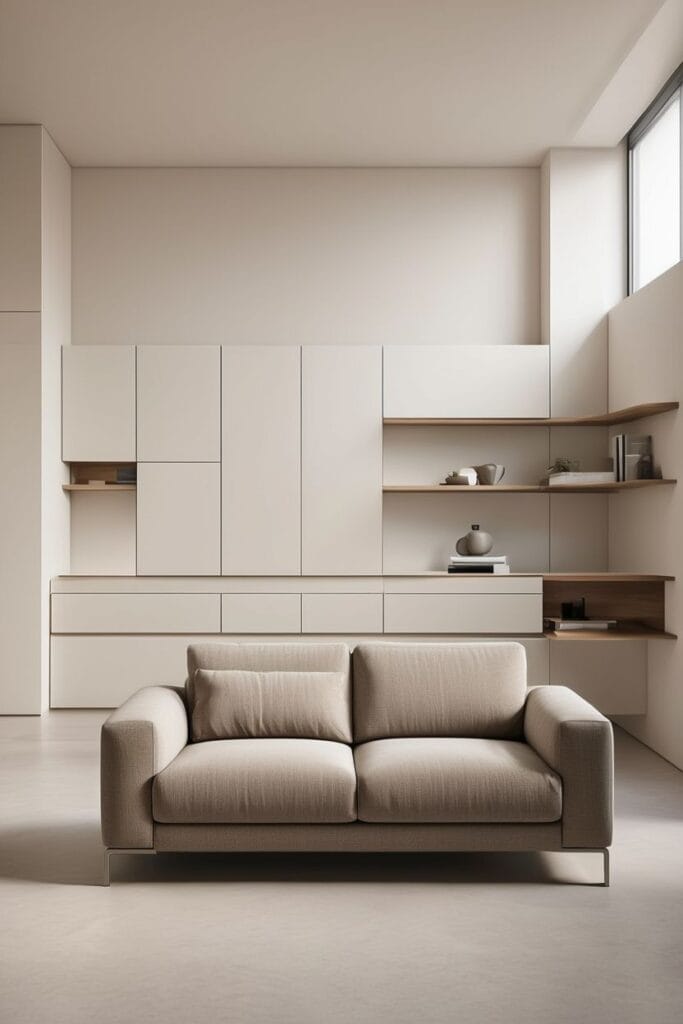
Clutter disrupts contemporary design instantly. Storage must be integrated thoughtfully. Think built-in cabinetry, hidden drawers, floating shelves, and multipurpose furniture.
Closed storage keeps surfaces clean, while open shelving allows for curated display. The trick is editing what you show. At HomeFitra, we often suggest treating shelves like art installations—balanced, minimal, and intentional.
Use Art as a Defining Element
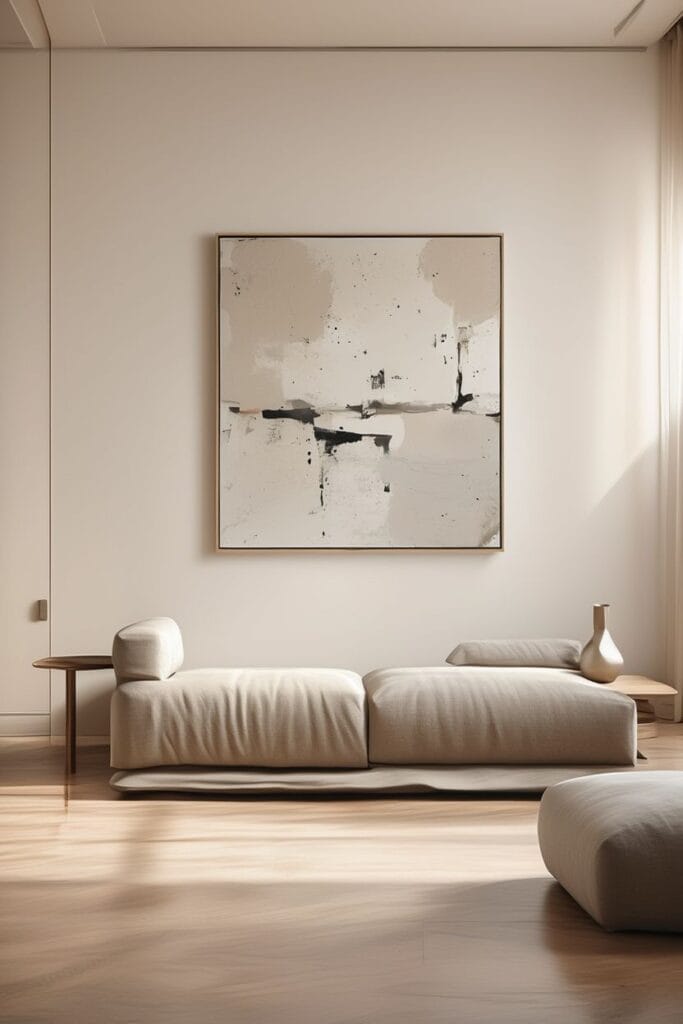
Art transforms a contemporary interior from polished to personal. Large-scale pieces work beautifully in modern spaces. They command attention without overwhelming the simplicity around them.
Hang artwork at eye level and give it breathing room. Avoid overcrowding walls. If you’re unsure how to design a contemporary home that reflects personality, start with art. It tells your story while maintaining sophistication.
Create Smooth Transitions Between Rooms
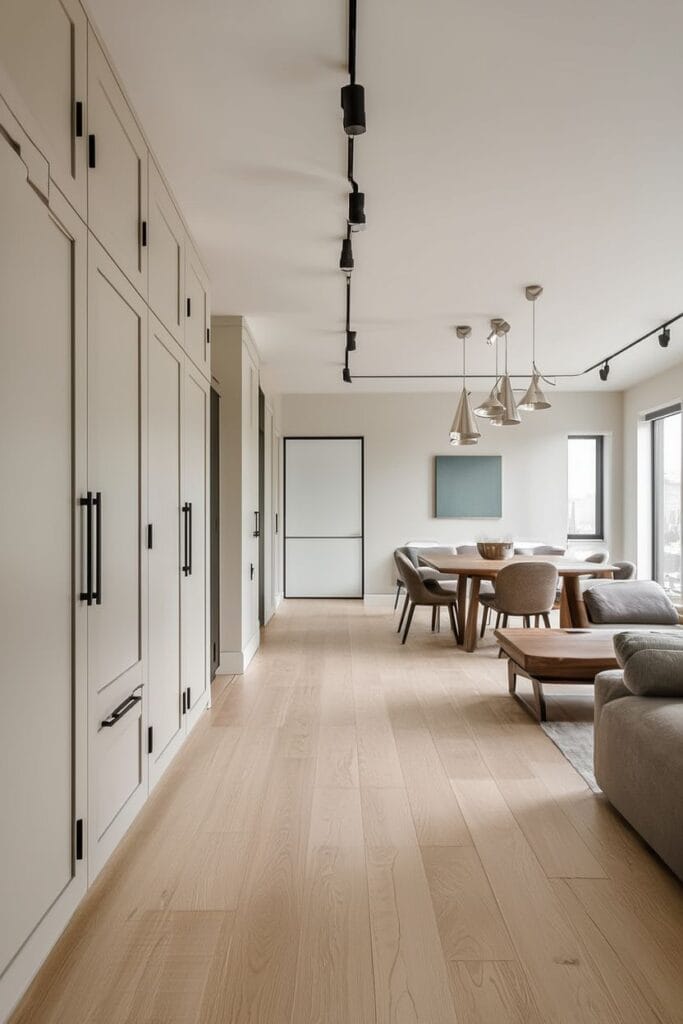
A contemporary home should feel cohesive from entryway to bedroom. Flooring continuity helps enormously. So does repeating finishes—black hardware, walnut tones, brushed nickel lighting.
Avoid abrupt changes in color or style. Instead, let each room feel like a chapter in the same story. Subtle shifts in accent colors or textures keep things interesting while preserving flow.
Incorporate Subtle Luxury Details
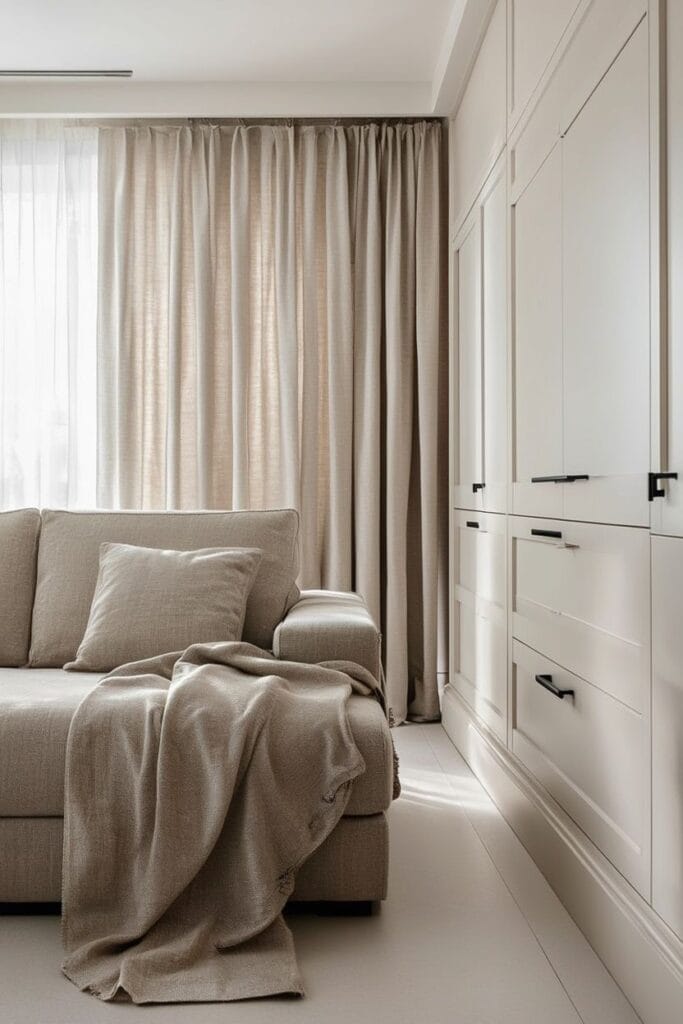
Luxury in contemporary design is quiet. It’s in the details. Tailored upholstery seams. Soft-close drawers. High-quality textiles. These elements may not shout, but they’re felt.
Swap builder-grade hardware for sleek pulls. Choose thicker baseboards for a refined finish. Install floor-to-ceiling curtains to elongate walls. Small upgrades collectively elevate the entire home.
Soften Windows with Intentional Treatments
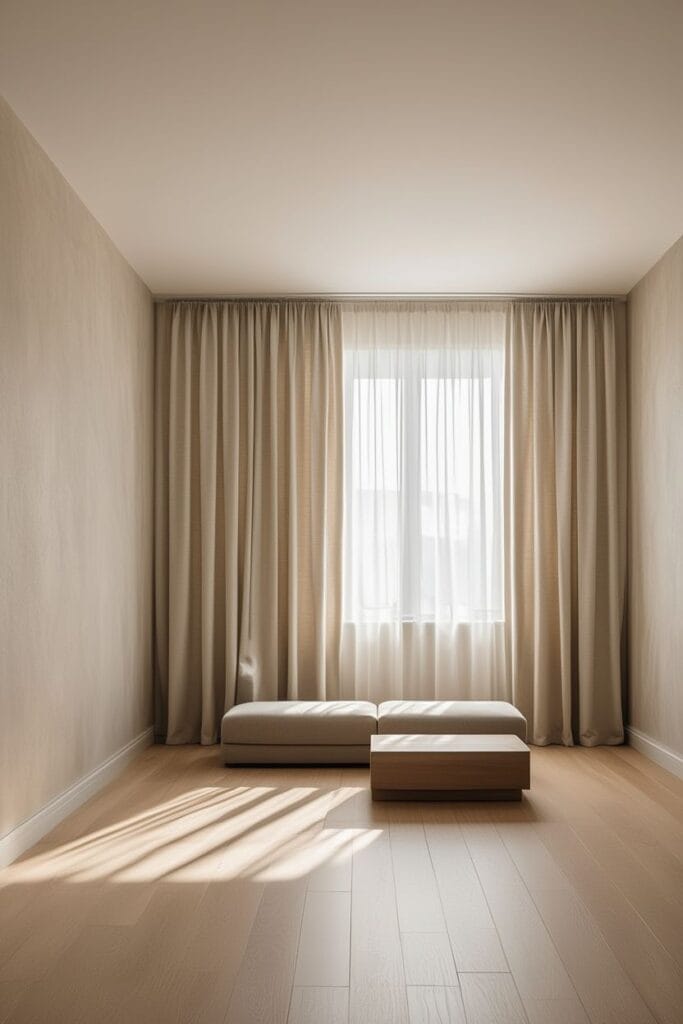
Window treatments shape both light and mood. Contemporary spaces favor simplicity—linen drapes, roller shades, or layered sheers. Avoid heavy valances or ornate patterns.
Mount curtains close to the ceiling and extend them wider than the window frame. This trick makes rooms feel taller and windows larger. It’s a simple move with dramatic impact.
Mix Metals Thoughtfully
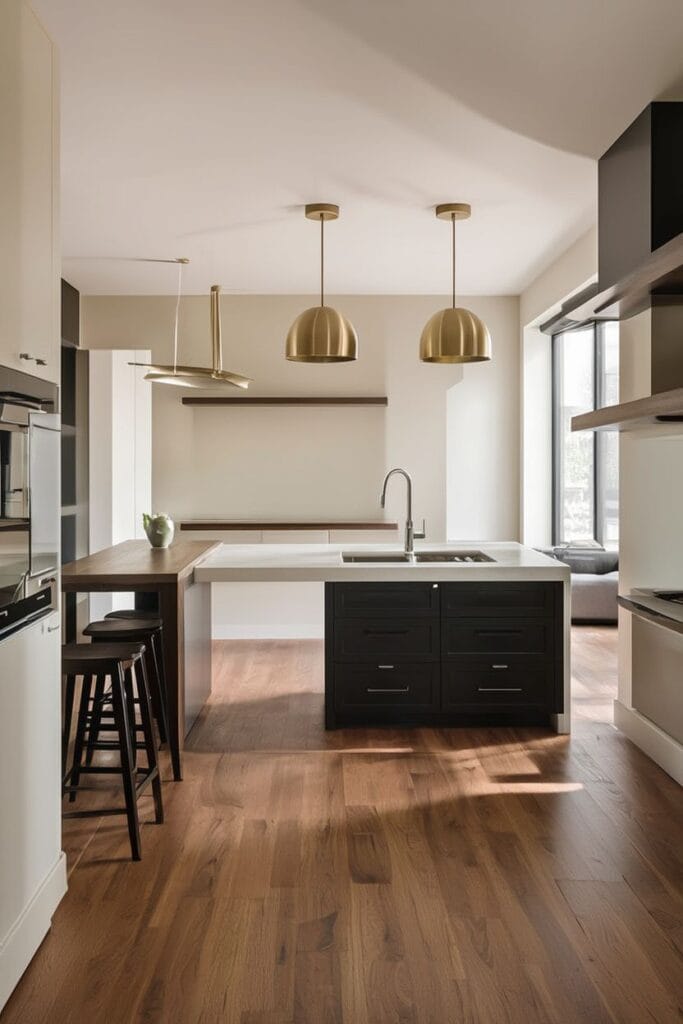
Gone are the days of matching every metal finish. Contemporary interiors embrace contrast—black with brushed brass, chrome with matte nickel—but it must feel deliberate.
Limit yourself to two primary finishes and repeat them throughout the space. This subtle repetition creates harmony without monotony. Mixing metals adds depth and prevents a flat, one-note look.
Prioritize Function Alongside Beauty
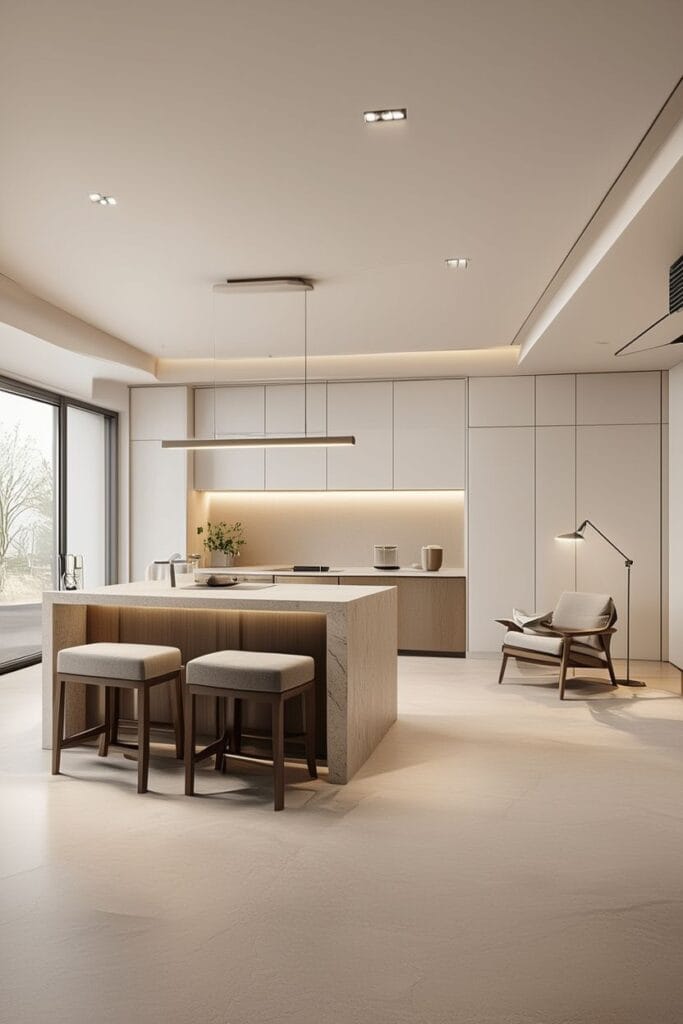
Contemporary design isn’t just about aesthetics. It’s about livability. Ask yourself how each space supports your daily routine. Does your kitchen island allow for casual seating? Is there enough lighting near reading chairs?
Beautiful design loses its appeal when it’s impractical. The best contemporary homes blend form and function seamlessly, ensuring comfort without compromising style.
Understanding color psychology plays a major role when learning how to design a contemporary home, and studies from Architectural Digest highlight how neutral palettes influence mood.
Edit Ruthlessly for a Polished Finish
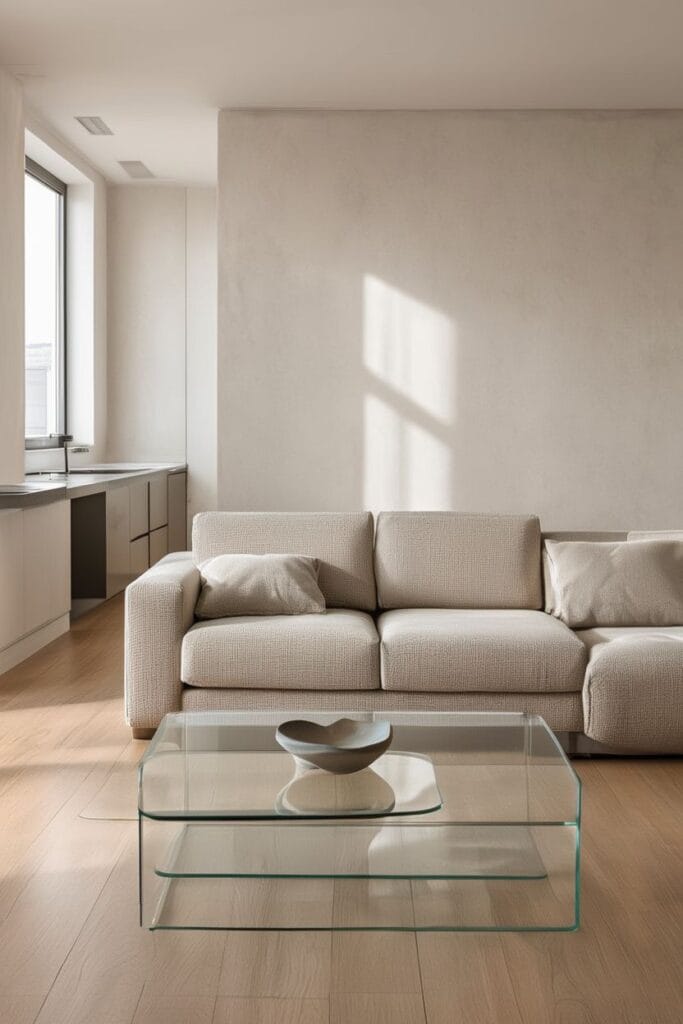
Finally, editing is the secret ingredient. When you think you’re done, remove one accessory from every surface. Clear countertops. Simplify decor. Leave negative space.
Contemporary interiors thrive on restraint. Knowing what not to include is just as important as knowing what to add. If you’re still refining how to design a contemporary home, remember that less truly can be more—when done thoughtfully. (You may also explore our guide on modern living room decor.)
Conclusion
Designing a contemporary home isn’t about chasing trends or copying a showroom. It’s about clarity. Intentional layouts. Cohesive palettes. Balanced textures. Subtle luxury. When you understand how to design a contemporary home with these principles, your space begins to feel effortless—modern yet welcoming, streamlined yet soulful.
Trust your instincts, invest in quality, and edit with confidence. The result will feel refined, personal, and timeless.
FAQs
What is the first step in how to design a contemporary home?
Start with layout planning. An open, well-defined floor plan creates the foundation for contemporary design. Once flow and function are established, selecting colors and materials becomes much easier.
How can I make a contemporary home feel warm instead of cold?
Layer soft textures like wool rugs, linen curtains, and upholstered furniture. Use warm wood tones and subtle lighting to balance clean lines. Warmth comes from contrast and thoughtful layering.
What colors work best for contemporary home design?
Neutral palettes with controlled accents work beautifully. Soft whites, taupe, greige, charcoal, and muted earth tones create a cohesive backdrop while allowing statement pieces to stand out.
How do I avoid clutter in a contemporary space?
Incorporate built-in storage and keep surfaces intentionally styled. Edit decor regularly and prioritize closed storage to maintain clean lines and visual calm.
Is contemporary design suitable for small homes?
Absolutely. In fact, understanding how to design a contemporary home can make small spaces feel larger. Open layouts, cohesive colors, and streamlined furniture create the illusion of more space without sacrificing style.
Yo, check out boss88online! It’s my go-to spot for some serious gaming action. Been hitting it up lately and the payouts are legit. Definitely worth a look! Find it here: boss88online
Heard some buzz about f68vip. Anyone tried it out yet? Give us the lowdown! Is it legit or just another flash in the pan? Gotta know before I risk my hard-earned cash. Find out more at f68vip.
Yo, nwe88, huh? Sounds kinda catchy. What’s the deal, good bonuses? Decent selection of games? Spill the beans, people! Considering giving it a shot. Check it out for yourself at nwe88.
[6838]111bd অফিসিয়াল লগইন | বিকাশ ডিপোজিট ও অনলাইন স্লট গেম,111bd অ্যাপ ডাউনলোড করে উপভোগ করুন সেরা অনলাইন স্লট গেম এবং লাইভ ক্যাসিনো গাইড। বিকাশ দিয়ে দ্রুত ডিপোজিট করে আজই আপনার যাত্রা শুরু করুন। visit: 111bd
The payouts here are legit and the customer support is surprisingly helpful. I’ve tried a few others but bdcr777 feels more reliable for long term play.
Finding a reliable source for the app was hard until I found this site. Installation was a breeze. Go to aajilidownload to get started.
[5647]Linebet Official Login – বিকাশ পেমেন্ট ও ক্যাসিনো বোনাস পান,linebet অ্যাপ ডাউনলোড করে অনলাইন ক্যাসিনো বোনাস পান। বিকাশ দিয়ে সহজে পেমেন্ট এবং স্লট গেম খেলার নিয়ম জানতে আজই ভিজিট করুন। visit: linebet
pkgb777 is a gem. I appreciate how transparent they are with their rules and promotions. It makes the whole gaming experience much more relaxing and trustworthy.
Finally found a platform that doesn’t lag during peak hours. The game variety is impressive and the customer support is actually helpful. pk68vippk is definitely my new go-to.
If you are looking for a professional casino experience from home this is it. The graphics are top notch and the gameplay is fair. Visit betpkonlinecasino today.
The app version is just seamless. I can play on the go without any lag, which is a huge plus for me. Highly recommend bd7c7777apps to everyone.
The app is incredibly lightweight and doesn’t lag even on my old phone. It makes the whole experience so much better. Check out 881betapp if you want something stable.
I have tested plenty of gaming hubs over the years but this corner of the web keeps surprising me. The slot collection changes regularly and I always spot new favorites before they go mainstream. Payments clear out within the hour and the bonus terms are actually fair. My weekend sessions have never been this relaxed. Start your own journey with thonix911 and feel the difference a player first design really makes.
Finally found a safe place to get the game. The download was fast and the installation was a breeze. Thanks to batpkrgamedownload.
[1798]Hexabet লগইন এবং অ্যাপ ডাউনলোড – বিকাশ দিয়ে সেরা স্লট গেম,hexabet লগইন করুন এবং অ্যাপ ডাউনলোড করে লাইভ ক্যাসিনো খেলার নিয়ম জানুন। এখন বিকাশ দিয়ে অনলাইন ক্যাসিনো গেমে অংশগ্রহণ করুন। আজই জয়েন করুন। visit: hexabet
Really impressed with the variety of games here. Everything loads quickly and I haven’t had any lag during my sessions. Definitely check out zo88vip if you want a top-tier experience.